The New Oil Rigs: Why AI Data Centers Are the Real Power Play
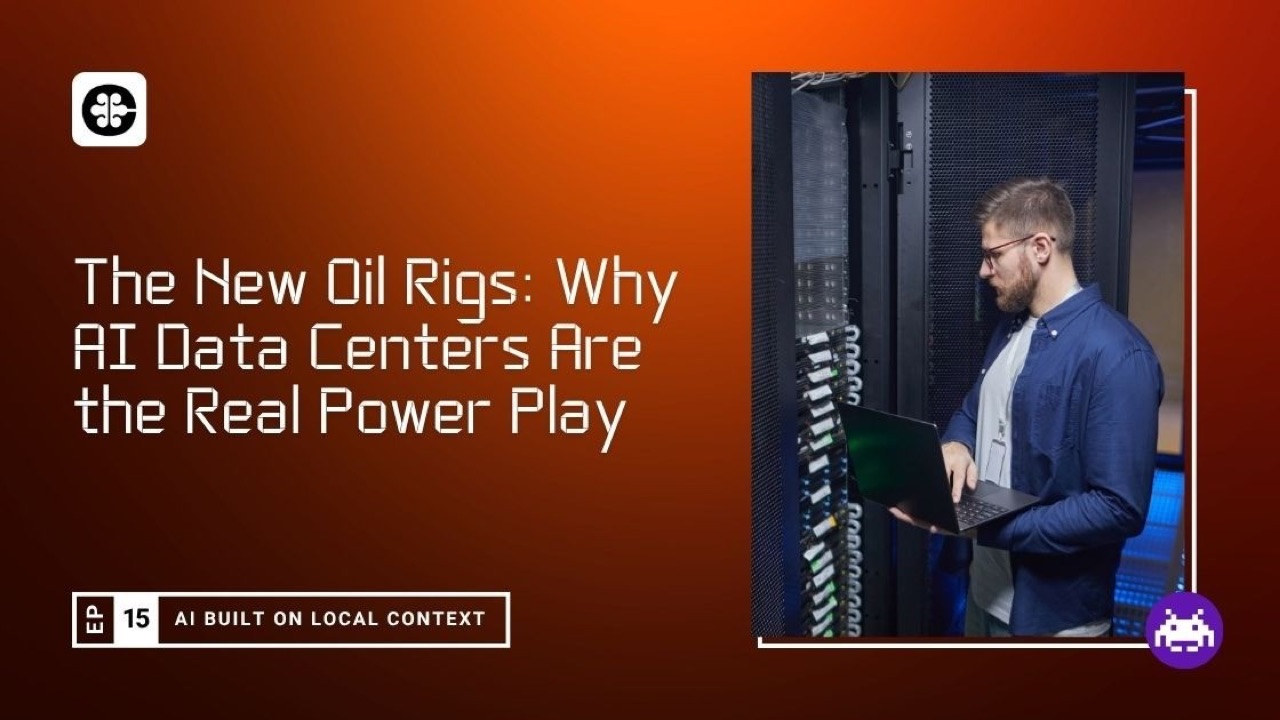
If you think AI is a software play, you’re missing the biggest capital land-grab in history.
Amazon, Google, Meta, and Microsoft are projected to spend a combined nearly $700 billion on AI infrastructure in 2026 alone. That's not a budget line. That's a declaration of strategic intent. When companies are willing to sacrifice free cash flow — Amazon's is expected to go negative this year, to build data centers, they're not betting on AI. They're betting on controlling AI's foundation layer for the next 30 years.
Most executives watch this and think it's a hyperscaler story. It isn't.
The Myth of the Cloud-First Enterprise
There's a comfortable assumption in the boardroom: "We'll just run on AWS or Azure". For years, the C-suite was sold a dream of "asset-light" operations. We were told that owning hardware was a legacy burden and that the cloud was an infinite, democratic utility. That was true for the SaaS era. It is patently false for the AI era.
When your AI systems run on someone else's infrastructure, your data, your model outputs, your inference logs, all of it sits inside a jurisdiction and a policy framework you don't control. The moment AI becomes core to your operations (and it already is), you've handed your most sensitive operational intelligence to a landlord who also competes with you.
The Allbirds Signal You're Misreading
Last week, Allbirds, a shoe brand once valued at $4 billion, announced it was abandoning footwear entirely to pivot into AI compute infrastructure, rebranding as "NewBird AI". The stock jumped over 600% in a single day.
Every headline mocked it as desperation. That's the wrong read.
The company's own rationale was blunt: "The rise of AI development and adoption has created unprecedented structural demand for specialized, high-performance compute that the market is struggling to meet".
A dying shoe company saw the gap more clearly than most active enterprises. The gap isn't AI models, it's AI infrastructure. And the enterprises that internalize this first will be the ones setting the terms for everyone else.
The Compute Dependency Trap
Most enterprises are building AI strategies on rented ground. They're optimizing prompts, fine-tuning models, building copilots, all while the infrastructure layer underneath them is controlled by three or four companies who can reprice, restrict, or restructure access at will.
This is the Compute Dependency Trap: you invest in AI capability without investing in AI infrastructure, and you end up dependent on the same players you're trying to differentiate from.
Infrastructure isn't IT overhead; it's a strategic moat. If you don't own the rack, you don't own the intelligence. It determines what you can build, how fast you can iterate, what data you can keep private, and ultimately, how defensible your AI advantage is.
Your Move Isn't to Build a Hyperscale Campus
To be clear, this isn't a call to build a 5-gigawatt facility in the Sahara. For most enterprises, the play is more deliberate: dedicated compute capacity, even modestly sized, that sits inside your governance boundary.
Every enterprise should aim for a 70/30 split. Rent 70% of your generic compute for scale, but own the 30% that powers your most sensitive, proprietary IP. If 100% of your 'brain' lives in a landlord's house, you don't have a company, you have a lease.
The question isn't "Can we afford to build infrastructure?" The real question is: "Can we afford for our company’s brain to be someone else's infrastructure problem?"
The winners of 2030 are quietly answering that question with capital today, not with a slide deck.
At what point does your reliance on Big Tech's 'utility' compute stop being an efficiency and start becoming a material threat to your company’s independence?
This episode is brought to you by CipherSense Agents — helping enterprises deploy intelligent AI agents that actually move the needle. Learn more at agents.ciphersense.ai